
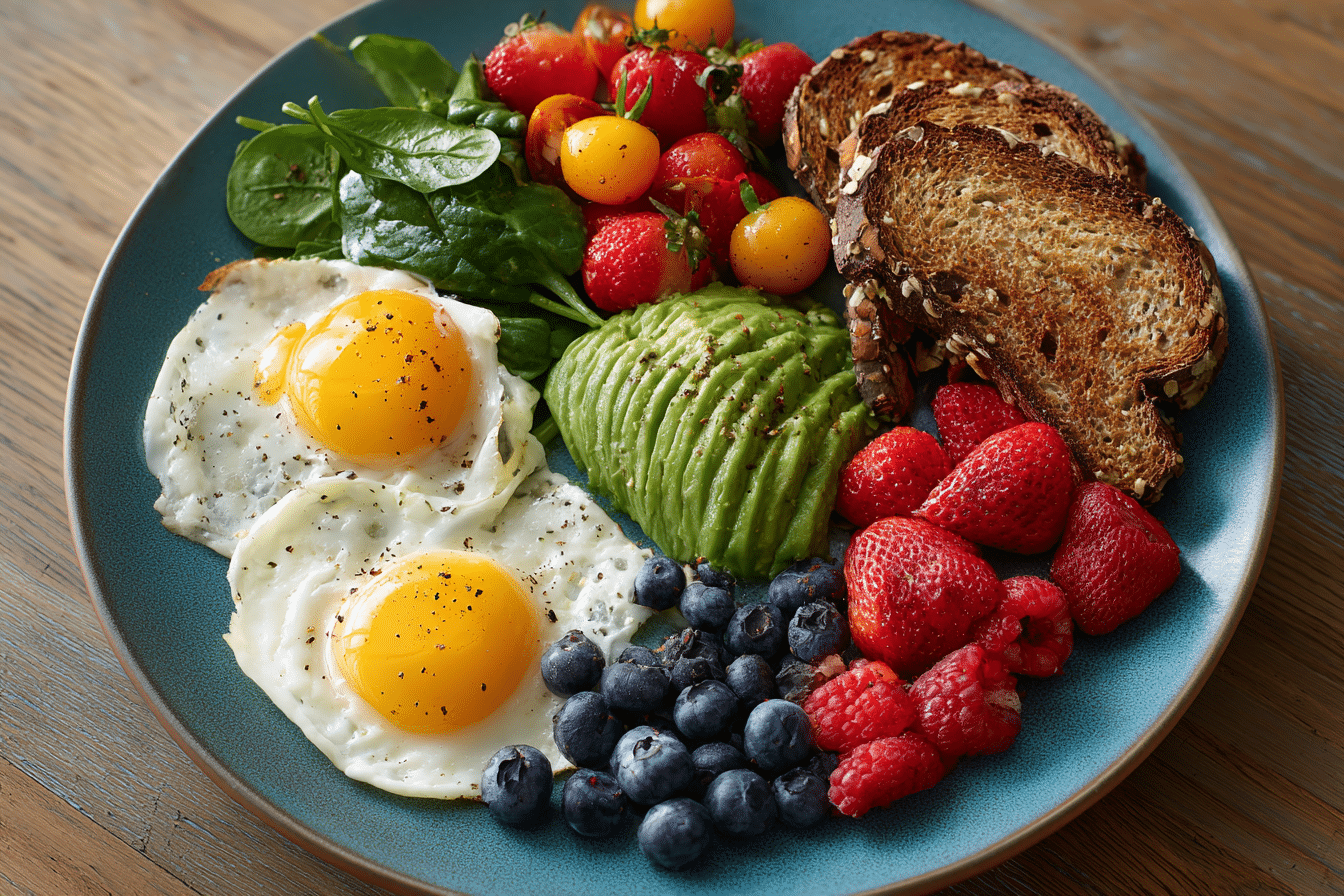
A balanced breakfast sets the tone for the rest of your day — fueling your body, supporting mental clarity, and stabilizing energy levels through the morning. Whether you’re heading to work, school, or squeezing in a workout, starting with the right combination of nutrients can make all the difference.
The idea behind a balanced breakfast is simple: combine high-quality protein, fiber-rich carbohydrates, and healthy fats in the right proportions. This trio not only satisfies hunger but also sustains you until your next meal.
From classic egg-based plates to vibrant smoothie bowls and hearty whole grains, this guide will walk you through the components and options that help build a fulfilling, delicious morning meal.
Ingredients Overview
The foundation of a balanced breakfast lies in three macronutrient groups — protein, complex carbs, and healthy fats — supported by vitamins and minerals from fruits or vegetables.
1. Protein
Protein helps keep you full longer and supports muscle health and repair. Here are some breakfast-friendly sources:
-
Eggs – Versatile, quick to cook, and rich in essential amino acids.
-
Greek yogurt – Thicker and higher in protein than regular yogurt.
-
Cottage cheese – Great for both sweet and savory combinations.
-
Nut butters – Almond, peanut, or cashew butter are plant-based protein sources.
-
Tofu or tempeh – Ideal for plant-based diets.
Tip: If using plant-based proteins, consider combining different sources (e.g., nuts with whole grains) to create a complete amino acid profile.
2. Complex Carbohydrates
These provide the body’s primary energy source and help regulate blood sugar when paired with fiber and fat.
-
Whole grain bread or toast – Look for 100% whole grain with at least 3g of fiber per slice.
-
Oats – Steel-cut or rolled oats are best for slow energy release.
-
Quinoa – A complete protein and complex carb rolled into one.
-
Sweet potatoes – Naturally sweet, fiber-rich, and nutrient-dense.
Note: Avoid refined carbs like sugary cereals, white bread, or pastries, which spike and crash blood sugar levels.
3. Healthy Fats
Fats add satiety and help with the absorption of fat-soluble vitamins (A, D, E, and K).
-
Avocados – Creamy and rich in monounsaturated fats.
-
Chia seeds or flaxseeds – Packed with omega-3s and fiber.
-
Nuts – Almonds, walnuts, and pistachios provide crunch and nutrients.
-
Olive oil – Drizzle over toast or roasted vegetables.
4. Fruits & Vegetables
Don’t skip this category — it delivers antioxidants, fiber, and hydration.
-
Berries – Low in sugar and high in vitamin C and fiber.
-
Bananas – Great for quick energy and potassium.
-
Spinach, kale, or bell peppers – Ideal for egg scrambles or breakfast wraps.
-
Tomatoes – Add acidity and freshness to savory dishes.
5. Dairy or Dairy Alternatives
-
Milk or fortified plant-based milks – Choose unsweetened versions with calcium and vitamin D.
-
Cheese – Adds flavor and protein; go for moderation.
Optional Add-Ons: A small cup of black coffee or green tea can accompany your meal, offering antioxidants and mental focus without added sugar.
Step-by-Step Instructions
Here’s how to construct a balanced breakfast that checks all the nutritional boxes. We’ll walk through two sample builds: a savory option and a sweet option.
Savory Build: Avocado Toast with Egg and Veggies
-
Toast the Bread
Use a slice of whole grain or sourdough bread. Toast it until golden and crisp. -
Prepare the Avocado Spread
Mash half an avocado with a pinch of salt, lemon juice, and crushed red pepper. This adds creaminess and a subtle kick. -
Cook the Egg
Opt for a poached or soft-boiled egg. The runny yolk adds richness and visual appeal. Alternatively, scramble with a bit of olive oil. -
Add Vegetables
Lightly sauté spinach or kale, or slice a fresh tomato. Layer on top of the avocado for added texture and nutrients. -
Finish with a Sprinkle
Top with hemp seeds or crumbled feta for extra protein and flavor.
Sweet Build: Protein Oats with Berries and Nuts
-
Cook the Oats
Use rolled oats and cook with milk or a milk alternative for added creaminess. Simmer until soft. -
Add Protein
Stir in a scoop of protein powder (vanilla or unflavored), Greek yogurt, or cottage cheese once oats are slightly cooled. -
Mix in Fruits
Add sliced banana, blueberries, or strawberries. Frozen berries work well if fresh aren’t available. -
Sprinkle with Seeds and Nuts
Add chia seeds, walnuts, or pumpkin seeds for crunch and healthy fats. -
Flavor Naturally
Drizzle with a little maple syrup or cinnamon for natural sweetness.
Chef’s Advice: Always balance flavor with texture. A successful breakfast has contrast: creamy oats with crunchy toppings, or smooth avocado with crisp toast.
Tips, Variations & Substitutions
-
Time-Saving Prep: Pre-chop fruits, pre-cook boiled eggs, and portion oats into jars for easy assembly during busy mornings.
-
High-Protein Options: Use tofu scramble instead of eggs for a plant-based protein hit. Add protein powder to pancakes or smoothies.
-
Low-Carb Swap: Replace toast with sautéed mushrooms or serve eggs over leafy greens for a lighter option.
-
Gluten-Free: Choose certified gluten-free oats, buckwheat, or gluten-free bread.
-
Vegan Friendly: Use plant-based yogurt, nut butter, and legumes like lentils or tempeh.
Regional Twist Ideas:
-
Japanese Breakfast – Grilled salmon, rice, miso soup, and pickled vegetables.
-
Mexican-Inspired – Breakfast tacos with black beans, avocado, and salsa.
-
Nordic-Style – Rye bread with smoked fish, cucumber, and boiled egg.
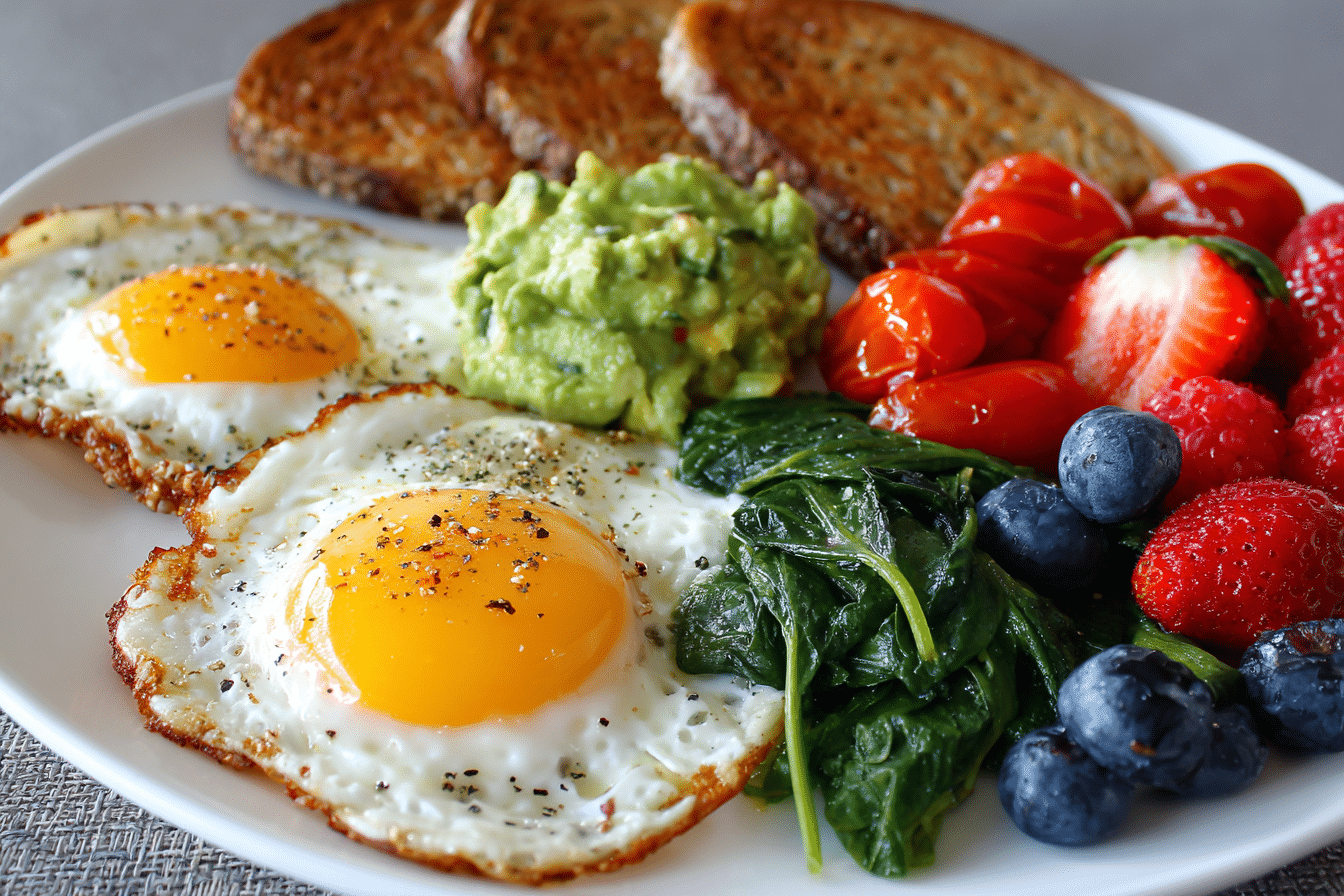 Serving Ideas & Occasions
A balanced breakfast fits beautifully into everyday routines or special occasions:
-
Weekday Mornings – Keep it simple: overnight oats, smoothies, or breakfast wraps are fast and nourishing.
-
Brunch Gatherings – Serve a spread of whole grain waffles, veggie frittata, and fresh fruit platters.
-
Meal Prep – Cook ahead and portion breakfast burritos or egg muffins for easy grab-and-go meals.
-
Family Breakfasts – Build-your-own parfait or toast bars allow everyone to customize.
Pairings: Herbal tea, black coffee, or a citrus-infused water refreshes without overpowering your meal.
Nutritional & Health Notes
A balanced breakfast typically includes:
-
20–30g of protein – for muscle support and long-lasting satiety.
-
Fiber (8–10g) – for digestion, blood sugar balance, and heart health.
-
Healthy fats – for brain health and hormone production.
-
Low added sugar – to avoid energy crashes and mood dips.
Breakfast eaters tend to have better nutrient intake, improved focus, and reduced risk of overeating later in the day. It also supports metabolic function and energy distribution throughout the day.
For weight management, focus on portion control and nutrient density rather than calories alone. Avoid ultra-processed breakfast items, and be mindful of added sugars in cereals, flavored yogurts, and bars.
FAQs
Q1: What’s the best time to eat breakfast?
A1: Ideally, eat breakfast within 1–2 hours of waking up to jumpstart your metabolism and replenish energy stores after fasting overnight. However, if you’re practicing intermittent fasting, timing can be adjusted based on your plan.
Q2: Can I skip breakfast and still be healthy?
A2: Yes, skipping breakfast isn’t inherently unhealthy, especially if your eating window supports balanced nutrition later in the day. However, many people benefit from eating in the morning to maintain stable blood sugar and prevent overeating.
Q3: What are some quick breakfast ideas?
A3: Try overnight oats, Greek yogurt with fruit and seeds, whole grain toast with nut butter, or smoothies with spinach, banana, and protein powder. These take under 10 minutes and require minimal cleanup.
Q4: How can I add more protein to my breakfast?
A4: Use eggs, Greek yogurt, cottage cheese, protein powder, or tofu. Add nuts and seeds, or top toast with peanut butter for extra plant-based protein.
Q5: What should I avoid in breakfast foods?
A5: Avoid processed sugars (e.g., sugary cereals), refined carbs (white bread, pastries), and high-sodium items like processed meats. These can spike energy and cause crashes before lunch.
Q6: Is coffee okay with breakfast?
A6: Absolutely. Black coffee or coffee with a splash of milk is fine. Avoid adding too much sugar or flavored creamers, which add empty calories. Pair coffee with a balanced meal to reduce jitters or energy crashes.
Q7: Are smoothies a complete breakfast?
A7: Smoothies can be complete if they include protein (like Greek yogurt or protein powder), healthy fats (nut butter, chia seeds), and fiber-rich fruits or vegetables. Avoid all-fruit smoothies, which can spike blood sugar without satiety.
PrintBuilding a Balanced Breakfast – A Nourishing Start to Your Day

A balanced breakfast combining protein, complex carbs, and healthy fats to fuel your day with steady energy and satisfying flavor.
- Prep Time: 5 minutes
- Cook Time: 5 minutes
- Total Time: 10 minutes
- Yield: 1 serving 1x
Ingredients
-
1 slice whole grain toast
-
1/2 avocado
-
1 egg
-
1/2 cup sautéed spinach
-
1 tsp hemp seeds
-
Salt, lemon juice, crushed red pepper to taste
Instructions
-
Toast the bread until golden.
-
Mash avocado with salt, lemon juice, and red pepper.
-
Cook the egg to preference (poached or soft-boiled works well).
-
Sauté spinach lightly with olive oil.
-
Assemble: toast, avocado, spinach, egg. Sprinkle with hemp seeds.
Notes
Swap egg with tofu scramble for a vegan version. Use gluten-free bread if needed. Serve with herbal tea or fruit on the side.