
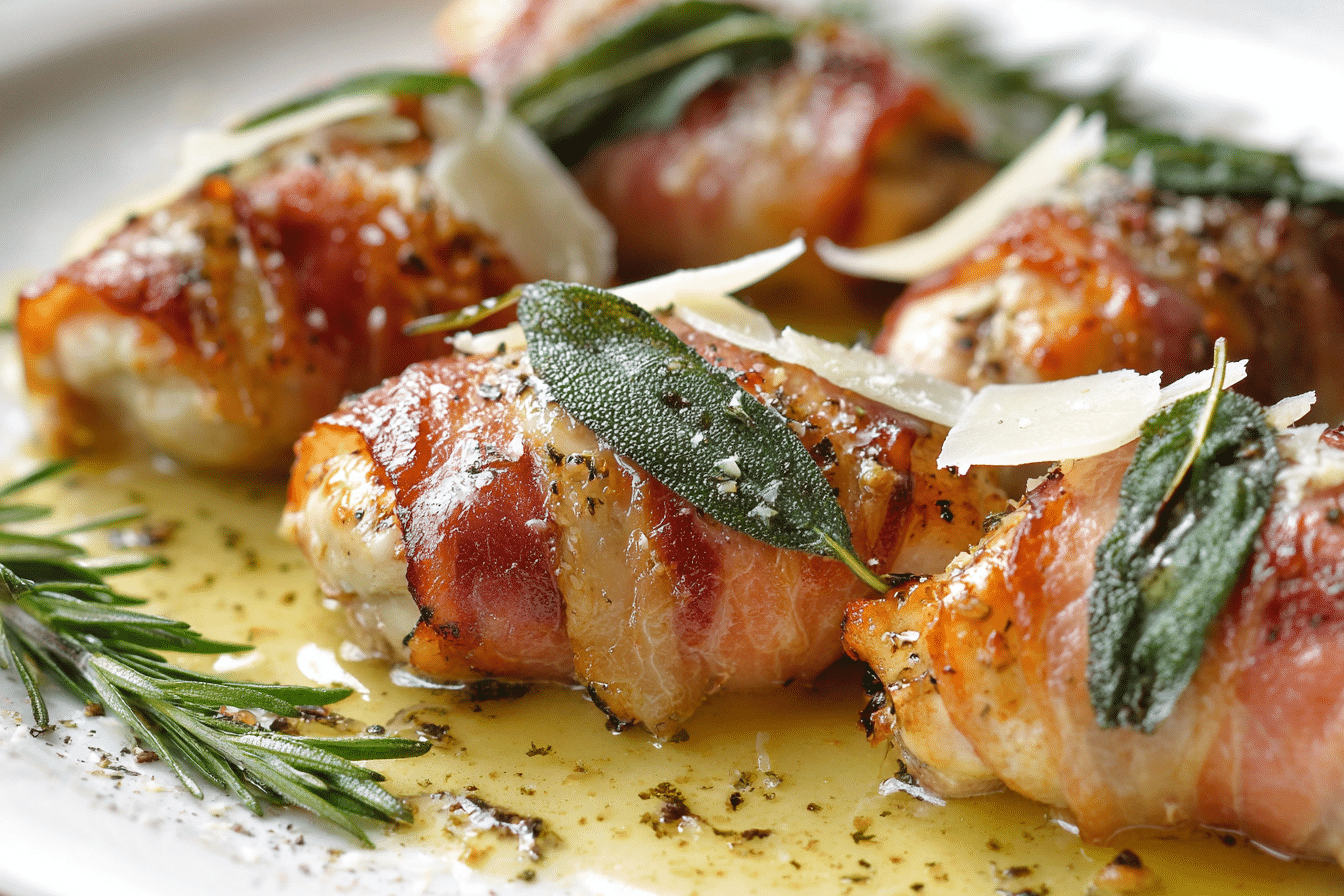
Chicken Saltimbocca is a beloved dish rooted in Roman cuisine, known for its simple preparation and bold, unmistakable flavor. The name translates to “jumps in the mouth,” and that’s exactly what this dish does—each bite delivers a savory mix of crispy prosciutto, fragrant sage, tender chicken, and a light white wine sauce that ties it all together.
Though traditionally made with veal, this chicken version is more approachable while still capturing everything that makes the original so special. The process is quick and easy, yet the result feels restaurant-worthy—ideal for both weekday meals and special dinners alike.
Ingredient Overview
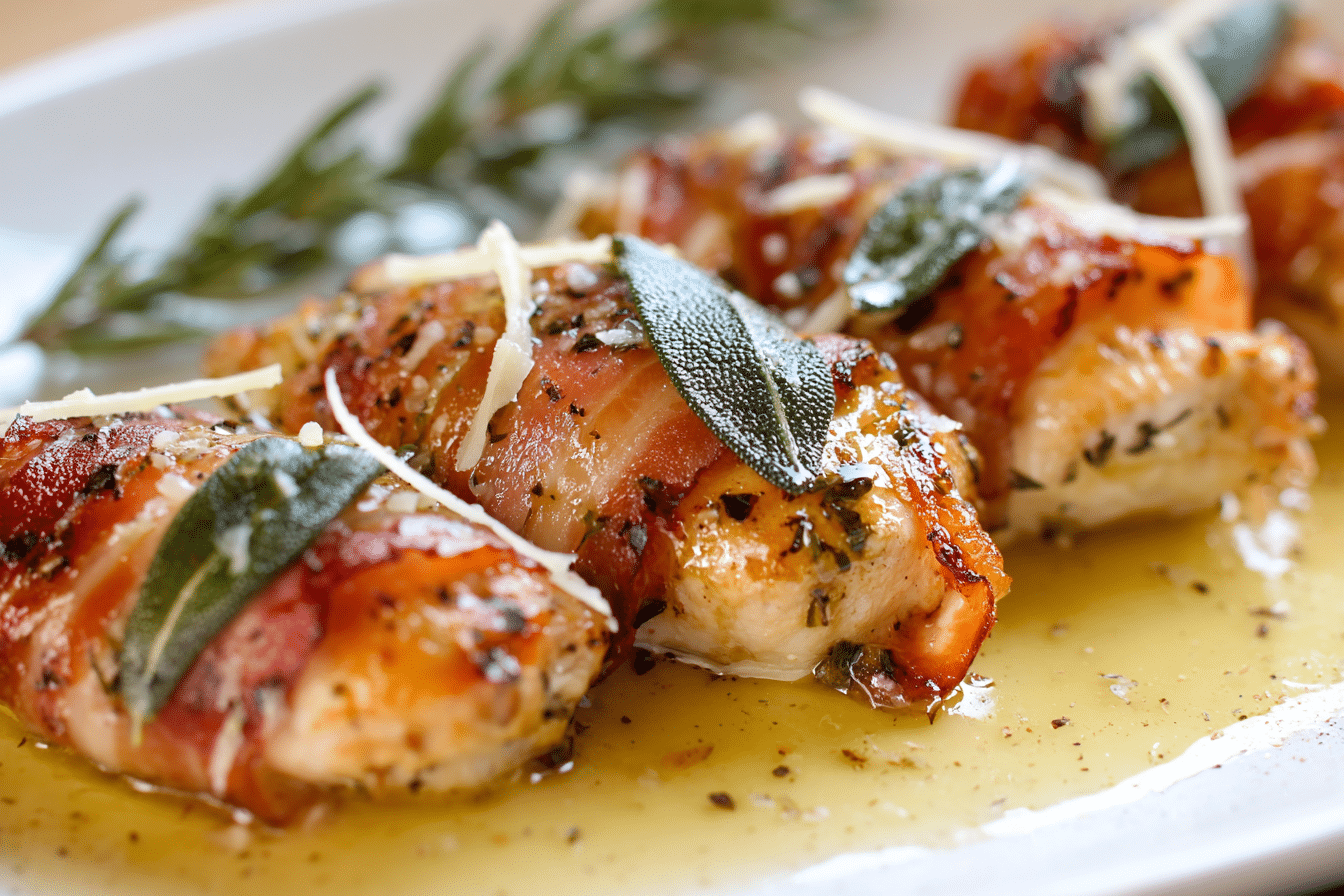
Every ingredient in Chicken Saltimbocca plays a key role in building layers of flavor. Here’s how to get the most out of each component.
Chicken Cutlets
Thin-sliced chicken breast is the foundation of the dish. You can buy pre-cut cutlets or slice boneless, skinless breasts horizontally, then pound them to an even thickness of about 1/4 inch. This helps them cook quickly and evenly without drying out.
Tip: Place the chicken between two pieces of plastic wrap and use a meat mallet or rolling pin for even pounding.
Prosciutto
Delicate, salty, and paper-thin, prosciutto crisps up in the pan and infuses the chicken with savory richness. Look for high-quality Italian prosciutto with a balanced fat-to-meat ratio—slices from Parma or San Daniele are excellent.
Optional Substitute: Speck or thin pancetta may be used, though the flavor will differ slightly.
Fresh Sage
Sage gives Chicken Saltimbocca its distinctive aroma and flavor. A fresh leaf is placed directly on each cutlet, becoming subtly toasted and fragrant during cooking.
Important: Fresh sage is essential—dried sage lacks the same intensity and texture.
All-Purpose Flour
A light flour dusting on the chicken helps it sear beautifully and allows the wine-based sauce to cling just enough. Only coat the chicken side, not the prosciutto.
White Wine
After searing, the pan is deglazed with a dry white wine to build a simple, elegant sauce. The acidity cuts through the richness of the meat and butter while lifting the fond from the pan.
Good Choices: Dry Pinot Grigio, Sauvignon Blanc, or dry vermouth all work well.
Butter & Olive Oil
A blend of butter and olive oil creates an ideal searing base. Butter gives flavor and richness, while olive oil prevents the butter from burning at high heat.
Optional Additions:
-
A splash of lemon juice for brightness
-
Chicken broth for a gentler sauce
-
Capers for a briny twist
Step-by-Step Instructions
1. Prep the Chicken
Slice and pound chicken breasts if needed to create uniform cutlets. Lightly season them with pepper—no salt is necessary since the prosciutto adds plenty.
2. Add Sage and Prosciutto
Place one sage leaf on each cutlet, then top with a slice of prosciutto. Press gently so the prosciutto sticks. You can secure with a toothpick if desired, though it’s not required.
Lightly dredge just the underside (chicken side) of each cutlet in flour, shaking off any extra.
3. Sear the Cutlets
In a large skillet, heat 1 tablespoon of olive oil and 1 tablespoon of butter over medium-high heat. When hot, add the chicken cutlets prosciutto-side down.
Cook for about 2–3 minutes until the prosciutto is golden and crisp. Flip carefully and cook the chicken side for another 2–3 minutes until fully cooked through.
Remove the cutlets and keep them warm on a covered plate.
4. Deglaze and Make the Sauce
Lower the heat to medium and pour 1/2 cup of dry white wine into the skillet. Use a wooden spoon to scrape up any browned bits from the bottom—this adds rich flavor to the sauce.
Let the wine simmer and reduce by half, about 2–3 minutes. Finish the sauce by swirling in 1 tablespoon of cold butter. For a brighter flavor, add a squeeze of lemon.
5. Serve
Plate the chicken and spoon the warm sauce over the top. Serve immediately while everything is hot and fresh.
Tips, Swaps & Variations
-
Make It Cheesy: Add a slice of fresh mozzarella to each cutlet after cooking, then broil briefly to melt.
-
Gluten-Free Option: Skip the flour or use gluten-free flour for dredging.
-
Light Sauce Alternative: Use lemon juice and broth instead of wine and butter for a leaner finish.
-
Extra Sage Flavor: Fry extra sage leaves in olive oil and use as a crisp garnish.
Regional Twist
Though veal is used in the classic Roman version (Saltimbocca alla Romana), chicken is now commonly used across Italy and abroad for a lighter and more accessible dish. The spirit of the dish remains deeply Roman—minimal ingredients with maximum flavor.
Serving Suggestions
This dish works beautifully for both casual dinners and formal meals. It pairs effortlessly with a range of sides:
-
Creamy polenta or risotto
-
Sautéed greens like spinach or broccolini
-
Roasted potatoes or garlic mashed potatoes
-
A crisp arugula salad with lemon dressing
Serve with crusty Italian bread to soak up the sauce, and enjoy with a chilled white wine like Pinot Grigio or a dry sparkling wine for balance.
Nutrition & Health Information
Chicken Saltimbocca offers lean protein with flavorful fat from prosciutto and butter. One serving typically ranges between 300 and 400 calories, depending on portion size and sauce.
Health-Friendly Adjustments:
-
Use olive oil only for cooking instead of butter.
-
Cut back on the amount of prosciutto or trim excess fat.
-
Pair with vegetables or grains for a balanced plate.
It’s naturally low in carbohydrates and easy to adapt for gluten-free or Mediterranean-style diets.
Frequently Asked Questions
Q1: Can I prep Chicken Saltimbocca ahead of time?
A: Yes. You can assemble the chicken with sage and prosciutto a few hours in advance. Store covered in the fridge and cook just before serving for best results.
Q2: Can I use a different herb if I don’t have sage?
A: Sage is traditional and provides a unique flavor, but if needed, fresh thyme or rosemary could be used. The flavor will be different, but still delicious.
Q3: Is it necessary to use wine for the sauce?
A: No. You can use low-sodium chicken broth with a splash of lemon juice or vinegar for acidity. The flavor will be slightly different but still satisfying.
Q4: Why only flour the chicken side?
A: The flour helps brown the chicken and adds a touch of body to the sauce. The prosciutto side doesn’t need it and may become soggy if floured.
Q5: Can I make this dish dairy-free?
A: Yes. Simply omit the butter and use olive oil for searing and sauce-making. Add lemon juice or broth to keep the sauce flavorful.
Q6: How long does this dish keep?
A: Store leftovers in an airtight container in the fridge for up to 3 days. Reheat gently in a skillet to preserve texture.
Q7: Can I freeze cooked saltimbocca?
A: It can be frozen, though prosciutto may lose its crispness upon reheating. For best results, refrigerate and consume within a few days.
Print
An Italian favorite made with thin chicken cutlets, prosciutto, fresh sage, and a white wine butter sauce—simple to prepare and full of rich, savory flavor.
- Prep Time: 10 minutes
- Cook Time: 25 minutes
- Total Time: 35 minutes
- Yield: 4–6 servings 1x
Ingredients
-
4 chicken cutlets (or 2 chicken breasts, halved and pounded)
-
4 thin slices prosciutto
-
4 fresh sage leaves
-
1/4 cup all-purpose flour (for dredging)
-
Freshly ground black pepper
-
1 tbsp olive oil
-
2 tbsp unsalted butter, divided
-
1/2 cup dry white wine
-
Optional: lemon juice for finishing
Instructions
-
Pound chicken to 1/4-inch thickness and season lightly with pepper.
-
Place 1 sage leaf on each cutlet and top with a slice of prosciutto. Press to adhere.
-
Lightly dredge the chicken side in flour, shaking off excess.
-
Heat olive oil and 1 tbsp butter in a skillet over medium-high. Cook prosciutto-side down for 2–3 minutes. Flip and cook chicken side for 2–3 minutes more. Transfer to a warm plate.
-
Add wine to skillet, scraping up any browned bits. Simmer until reduced by half, then stir in remaining butter. Add lemon juice if using.
-
Spoon sauce over chicken and serve immediately.