
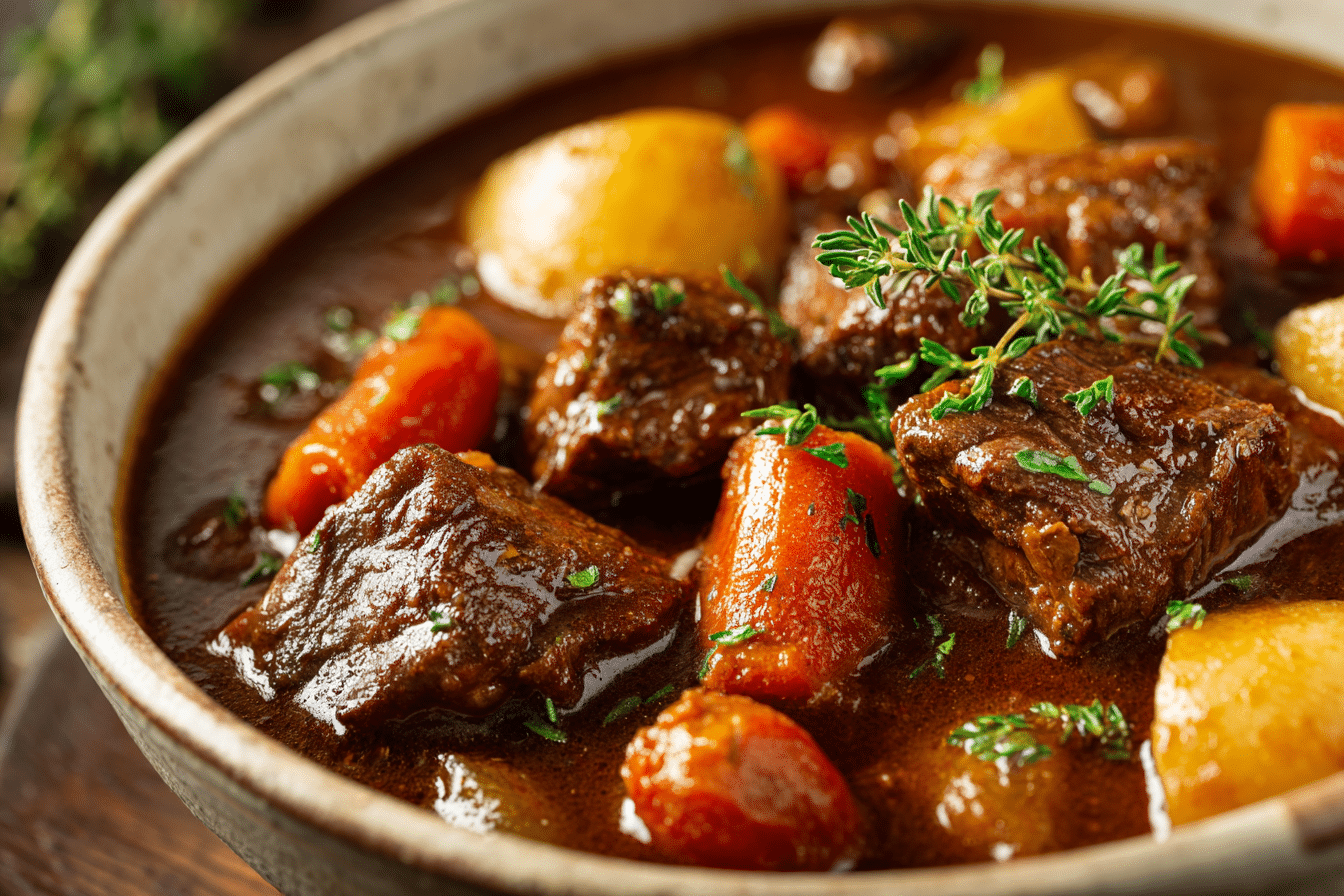
When the air turns brisk and you’re craving something that warms you from the inside out, few meals satisfy quite like a well-made beef stew. This ultimate beef stew recipe is the kind of dish that feels like a warm blanket on a cold night—hearty, rich, and loaded with tender meat and vegetables simmered in a deeply savory broth.
It’s a dish steeped in tradition and simplicity, made with easy-to-find ingredients and brought to life through slow, gentle cooking. The result is a thick, luxurious stew where the beef falls apart with a fork, the vegetables soak up all the goodness, and the broth becomes a velvety sauce that ties everything together.
Whether you’re preparing dinner for your family, cooking in advance for the week, or just in need of comfort food that delivers every time, this stew is dependable, satisfying, and incredibly delicious—all from one pot.
Ingredients Overview
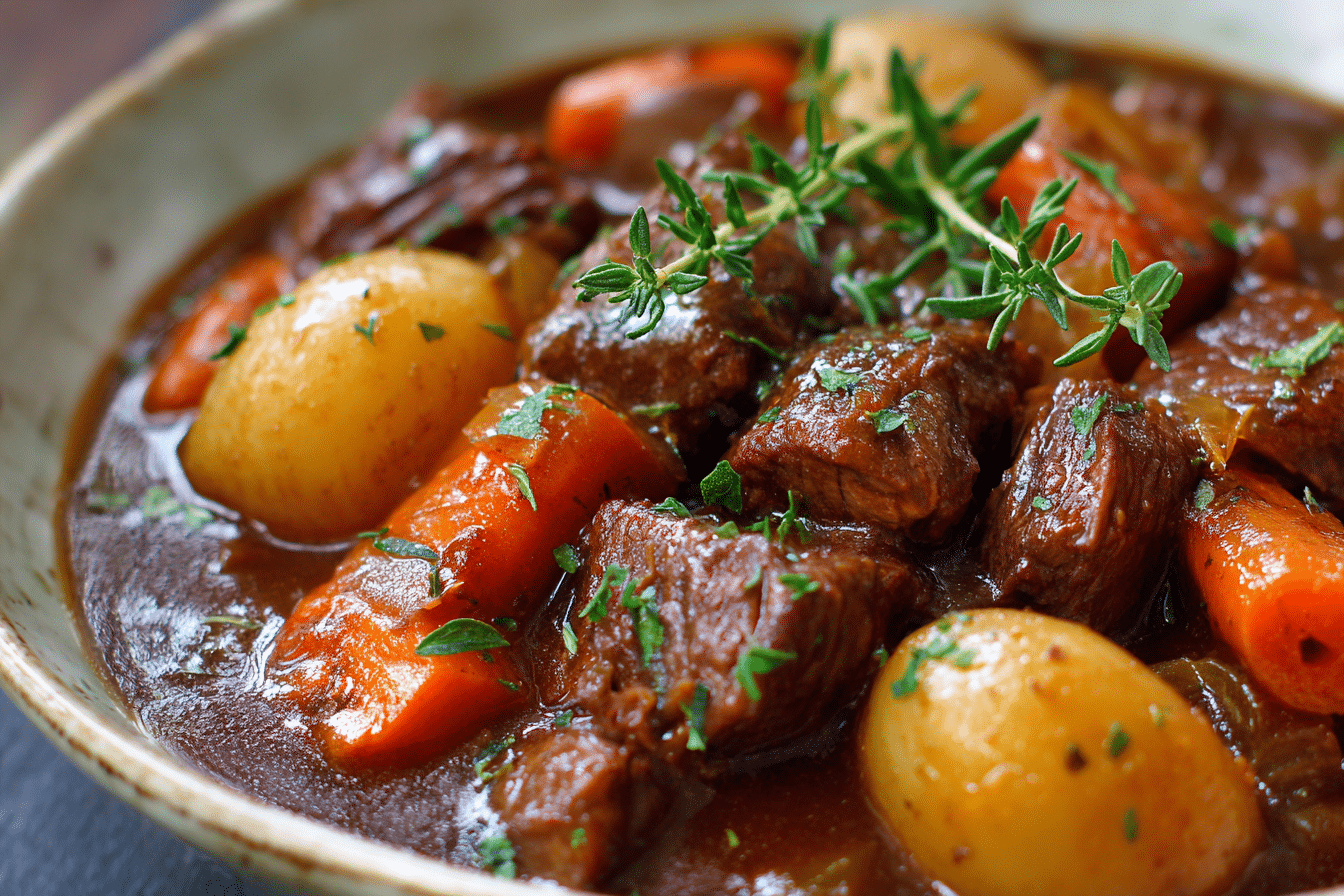
What makes this stew so comforting and flavorful is the perfect balance of humble ingredients that come together with patience and time. Each one has a purpose.
Beef chuck roast: This affordable, well-marbled cut is ideal for long cooking. As it simmers, it becomes meltingly tender and enriches the broth with beefy flavor. If chuck isn’t available, brisket or bottom round are solid substitutes.
Carrots: These sweet, earthy vegetables complement the richness of the beef. Slice them thick so they retain their texture during the slow cook.
Potatoes: Choose Yukon Gold or red potatoes—they hold their shape and add a creamy bite. Russets can be used for a softer, thicker texture as they break down more.
Celery: It’s subtle, but celery adds a light, aromatic quality to the base. It’s not essential, but it does round out the flavor.
Onions: When cooked slowly, onions bring a natural sweetness and depth that forms the heart of the stew’s flavor base.
Garlic: Just a few cloves go a long way. As it simmers, garlic blends into the background, enhancing every element of the stew.
Tomato paste: A small amount adds richness, acidity, and a layer of umami that balances the dish’s earthy tones.
Beef broth: The core liquid of the stew. Choose a full-bodied, low-sodium broth to allow better control over seasoning. Homemade is great, but high-quality store-bought broth works perfectly too.
Red wine: Adds depth, richness, and a bit of acidity to balance the flavors. A dry wine like cabernet or merlot is ideal. If you’d prefer not to use wine, simply replace it with extra broth and a dash of balsamic vinegar or Worcestershire sauce.
All-purpose flour: Tossing the beef in flour helps create a golden crust during searing and naturally thickens the stew as it cooks.
Bay leaves and thyme: These aromatic herbs release flavor slowly, adding subtle earthy and herbal notes throughout the cooking process.
Peas (optional): Stirred in just before serving, peas add color and a soft, sweet bite to contrast the richness of the stew.
Step-by-Step Instructions
-
Prep the meat: Cut the beef chuck into even 1½-inch chunks. Pat dry with paper towels—this is essential for proper browning. Toss with flour, salt, and pepper until well-coated.
-
Brown the beef: Heat a large Dutch oven or heavy-bottomed pot with oil over medium-high. Working in batches, sear the beef until browned on all sides. Don’t crowd the pan. Set aside once browned.
-
Cook the aromatics: Add onions to the same pot and sauté until softened and lightly golden, about 5 minutes. Add garlic and tomato paste, cooking for 1–2 minutes until fragrant.
-
Deglaze with wine: Pour in the red wine and scrape the bottom of the pot to release all the browned bits—this adds serious flavor. Let it simmer and reduce slightly for a few minutes.
-
Combine ingredients: Return the beef to the pot, then add carrots, potatoes, and celery. Pour in the beef broth until the ingredients are just covered. Add bay leaves and thyme.
-
Simmer low and slow: Bring everything to a gentle boil, then reduce to low heat. Cover and simmer for 2 to 2½ hours. Stir occasionally and check the tenderness of the beef.
-
Final touches: Stir in the peas during the last 10 minutes of cooking. Season with additional salt and pepper as needed.
-
Let it rest: Remove the bay leaves and let the stew sit off the heat for 10 minutes. This helps the flavors meld and allows the broth to thicken slightly before serving.
Avoid common missteps:
-
Dry your beef thoroughly before browning—it makes a big difference.
-
Sear the meat in small batches for a proper crust.
-
Keep the simmer gentle; high heat will toughen the beef.
-
Be patient—long cooking is key to tender, flavorful stew.
Tips, Variations & Substitutions
Smart cooking tips:
-
Cut vegetables into similar sizes so they cook evenly.
-
Want a thicker broth? Remove the lid in the last 30 minutes.
-
For added richness, swirl in a tablespoon of butter at the end.
Flavor upgrades:
-
Worcestershire sauce, soy sauce, or balsamic vinegar can all deepen flavor.
-
A dash of mustard or paprika can add complexity.
-
Add mushrooms or root vegetables like turnips or parsnips for variety.
Substitutions:
-
Gluten-free: Use gluten-free flour or cornstarch to coat the beef.
-
Lower-carb: Omit potatoes and add cauliflower or radishes.
-
Vegetarian: Use hearty mushrooms or lentils in place of beef, and substitute vegetable broth.
Serving Ideas & Occasions
This stew is incredibly versatile and works well for both everyday meals and casual entertaining.
Serve it with crusty bread for dipping, over a bed of mashed potatoes, or alongside rice or egg noodles. A fresh green salad or roasted vegetables on the side will balance the richness of the dish.
It’s perfect for batch cooking too—make it ahead, store in the fridge or freezer, and reheat as needed. The flavors get even better with time.
Pair with a glass of red wine or a dark beer to complement the savory profile. For non-alcoholic options, a splash of lemon in sparkling water or unsweetened iced tea works beautifully.
Nutritional & Health Notes
Beef stew may be comforting and hearty, but it can also be made with health-conscious adjustments.
Lean cuts of beef trimmed of excess fat reduce the calorie count without sacrificing taste. The vegetables provide fiber, antioxidants, and a range of nutrients including potassium and vitamin C.
Using low-sodium broth helps keep sodium in check, while the natural starch from the potatoes and flour thickens the stew without needing cream or butter. Adding spinach or kale during the last few minutes of cooking is a simple way to boost nutrition and color.
If you’re watching your intake, serve smaller portions with a big side salad or steamed veggies.
FAQs
1. Can I cook this in a slow cooker?
Yes, it works well. After browning the beef and sautéing the onions and garlic, transfer everything to your slow cooker. Cook on low for 7–8 hours or high for 4–5 hours until the beef is tender.
2. What’s the best beef cut for stew?
Chuck roast is ideal because it becomes tender and flavorful when cooked slowly. Brisket or bottom round are alternatives but may require longer cooking.
3. Is this stew freezer-friendly?
Absolutely. Let it cool fully before storing in airtight containers. Freeze for up to three months. Reheat on the stove over low heat, adding broth if needed to loosen the texture.
4. How do I thicken the stew more?
Simmer uncovered to reduce the liquid, or add a cornstarch slurry (1 tablespoon cornstarch + 1 tablespoon cold water) and cook for an extra 5–10 minutes.
5. What if I don’t want to use wine?
No problem. Just replace the wine with more broth. A splash of balsamic vinegar or Worcestershire sauce can help mimic the depth of flavor that wine usually provides.
6. Why is my beef tough?
It hasn’t cooked long enough. Beef stew needs time to break down the connective tissue. Keep the heat low and continue simmering until the beef becomes tender.
7. Can I add other vegetables?
Definitely. Try mushrooms, parsnips, turnips, or even sweet potatoes. Just be mindful of cook times—softer veggies should be added later so they don’t fall apart.
A rich, hearty beef stew loaded with tender beef, vegetables, and a thick, flavorful broth. A perfect one-pot comfort meal for cool evenings.
- Prep Time: 10 minutes
- Cook Time: 20 minutes
- Total Time: 30 minutes
- Yield: 4 servings 1x
Ingredients
2½ lbs beef chuck, cut into 1½-inch pieces
2 tbsp all-purpose flour
Salt and pepper, to taste
2 tbsp olive oil
1 large yellow onion, chopped
3 garlic cloves, minced
2 tbsp tomato paste
1 cup dry red wine
4 cups low-sodium beef broth
3 carrots, thick-sliced
3 celery stalks, chopped
3 medium Yukon Gold potatoes, diced
2 bay leaves
1 tsp dried thyme or 1 tbsp fresh thyme
1 cup frozen peas (optional)
Instructions
-
Toss beef with flour, salt, and pepper.
-
In a Dutch oven, heat oil and brown beef in batches; set aside.
-
Sauté onion for 5 minutes. Add garlic and tomato paste; cook 2 minutes more.
-
Deglaze pot with wine, scraping up browned bits. Let reduce slightly.
-
Return beef to pot. Add vegetables, broth, bay leaves, and thyme.
-
Bring to a gentle boil, reduce heat, cover, and simmer for 2 to 2½ hours.
-
Add peas during the last 10 minutes. Season to taste.
-
Discard bay leaves. Let stew rest 10 minutes before serving.